The answer may determine the future value of your expertise.
When The Room Realised This Wasn't Really About AI
At our latest Thought Leaders Breakfast Club, I asked the room a simple question:
"If AI took over your role, what would you do?"
Around the table were leaders from recruitment, hospitality, consulting, marketing, real estate, voice coaching, defense and business setup. Different industries. Different pressures. Different levels of exposure to AI.
And nobody treated the questions as a threat.
Instead, the room began separating the work they do from value they bring.
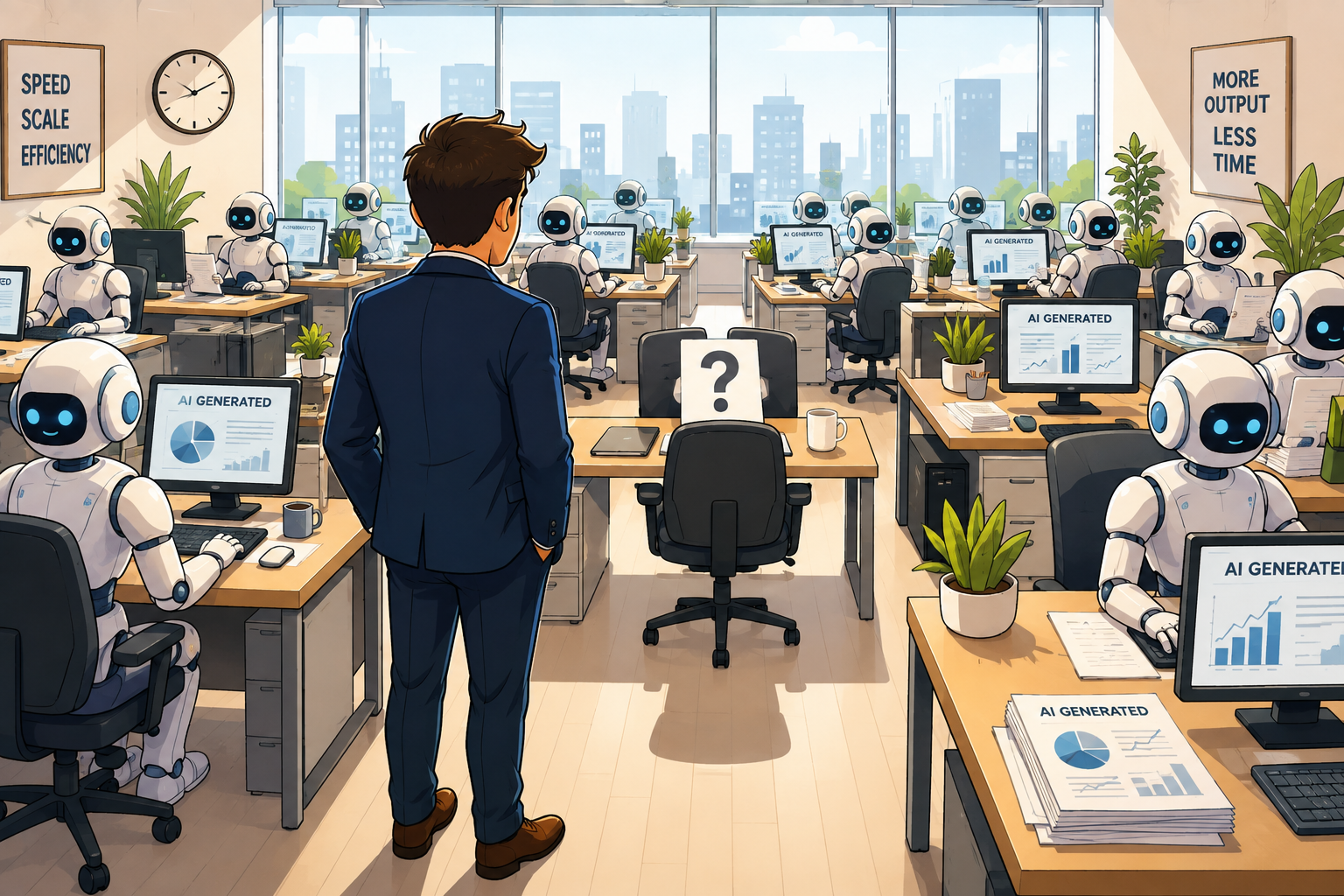
AI could handle more of the process. It could analyse faster, produce more and make certain tasks dramatically cheaper. In some cases, it was already doing the work that had previously taken experienced professionals hours, days or even months.
What became clear was that the conversation was not really about whether AI could perform the task.
It was about what still required a human being.
Again and again, the room returned to the same distinction.
But it could not fully carry the judgement, accountability, context or human connection behind it.
And that was where the conversation became much more interesting.
It's Never Been About What You Do
As the conversation continued, nobody around the table argued that AI couldn't write a report, prepare a presentation, draft a proposal or analyse data. In many cases, it already can.
What became interesting wasn't what AI could do.
It was what people believed their clients were actually paying for.
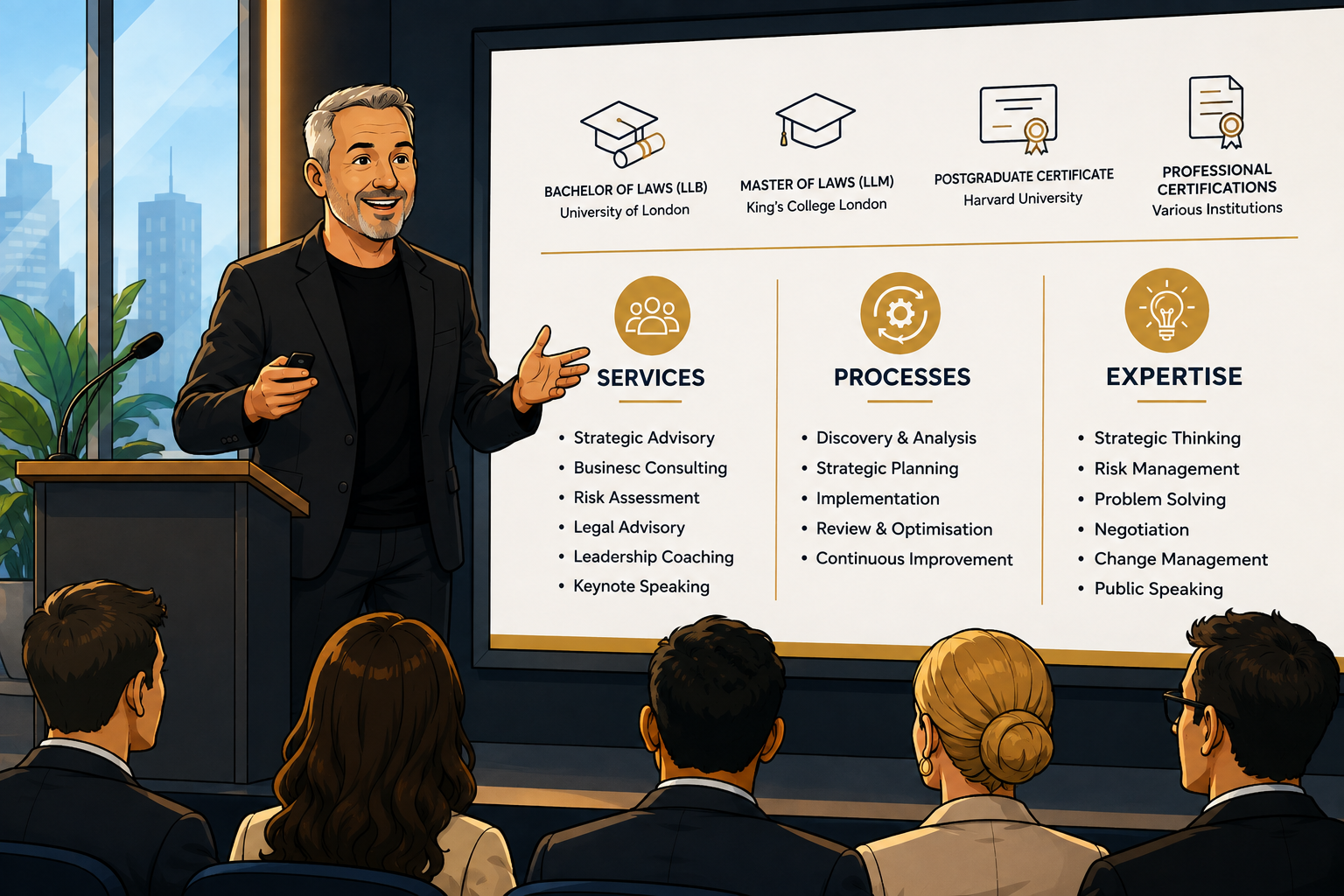
For years, we've described our businesses by what we do. We talk about our services, our processes, our qualifications and our expertise because that's how we've always introduced ourselves.
The Breakfast Club exposed something different.
We've been talking about the visible part of our value.
Nobody hires a lawyer because they want another contract. They hire someone who understands the regulations, spots the risks they can't see and helps them avoid an expensive mistake.
Nobody hires a keynote speaker because they need a forty-five minutes filled on a conference agenda. They hire someone who can change the way a room thinks, feels or acts long after the applause has stopped.
The deliverable isn't the product. It's proof that you solved the problem.
The problem you solve is the value.
That's why the conversation never became about whether AI was good or bad. Everyone around the table accepted that AI will become part of our lives and businesses. That isn't the debate anymore.
The real question is whether you've built your business around what you do, or around the problem only you know how to solve.
If all you sell is the task, AI will eventually become another option.
But if people choose you because of the experience, perspective, context and confidence you bring to solving their problem, AI doesn't replace your value.
It simply becomes another tool that helps you deliver it.
Experience Has Quietly Become The Advantage
For a while, many people believed AI itself would become the competitive advantage.
I don't think that's true.
Before long, almost every business will have access to the same technology. ChatGPT, Claude, Gemini and whatever comes next will become as ordinary as email, spreadsheets and search engines. Using AI won't make you different. It will simple become part of doing business.
That's why I believe we're asking the wrong question.
The real advantage has never been the tool.
It's the person using it.
The same AI can produce completely different outcomes depending on who's asking the question. An experienced lawyer will spot risks that someone else misses. A season strategist will see patterns hidden inside the data. A great speaker will understand what an audience needs to hear, not just what sounds good on a page.
The technology may be the same.
The experience behind isn't.
That's what the Breakfast Club revealed.
AI isn't creating a new definition of value.
It's revealing the one that's always been there.