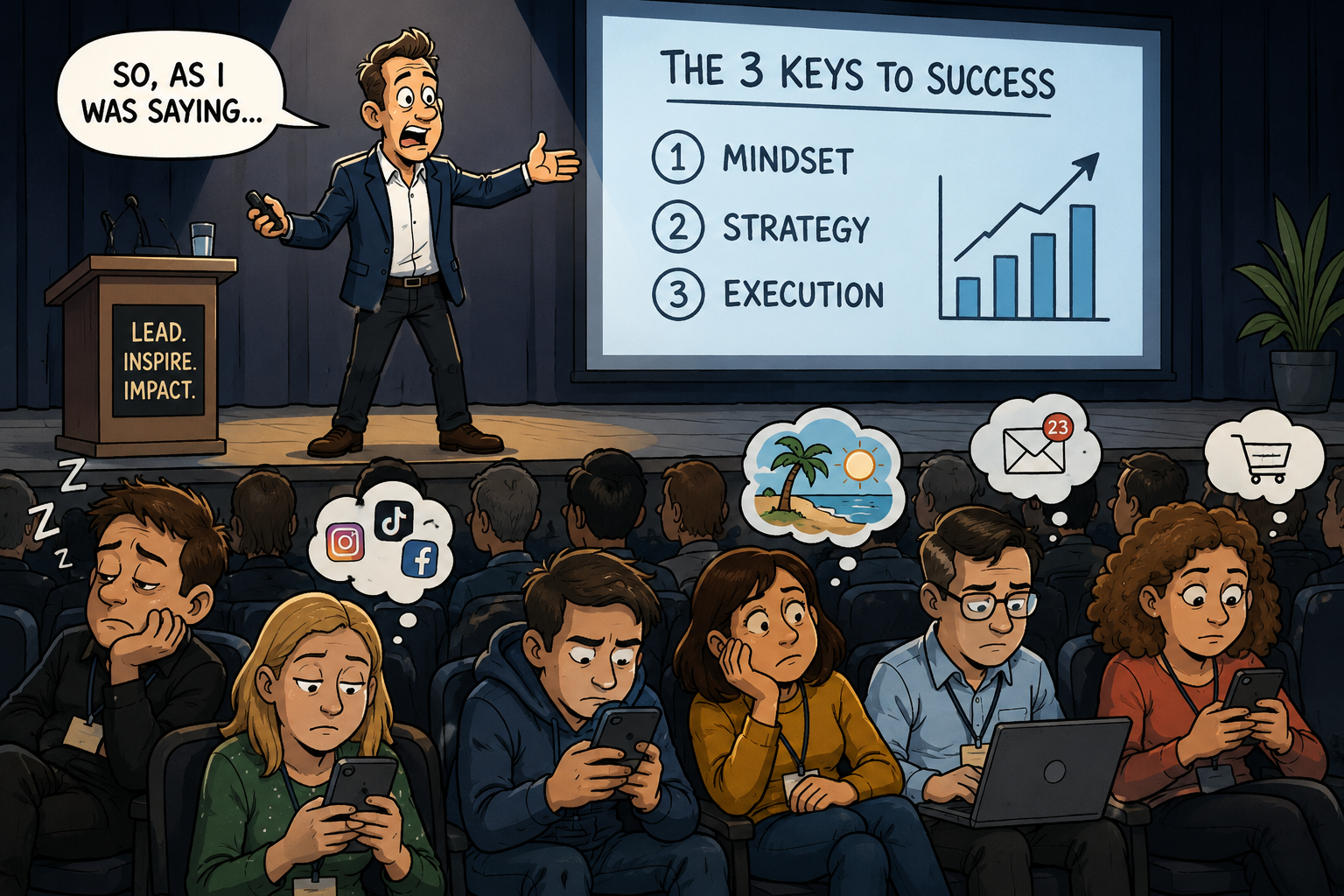
We spend so much time thinking about what we want to say that we forget a simple truth. People don't experience our message. They experience their own interpretation of it.
We Don't All Take Information In The Same Way
Azizah and I take in information completely differently.
I'm very visual and auditory. I like to see something, but I also absorb a huge amount by listening. Audiobooks, podcasts and conversations work incredibly well for me. I can hear an idea being explained and start processing it as we talk.
Azizah is visual too, but she's far more hands-on. She wants to see something and get inside it. Give her a new system or a piece of technology and she'll start testing it, moving things around and working out how everything connects.
She's far less interested in sitting through an explanation of how something works when she can actaully get in there and work it out herself.
You can probably imagine what our brainstorming sessions are like.
Looking at our backgrounds, perhaps that isn't surprising. I've spent decades communicating through radio, stages, speaking and conversations. Azizah was a photographer for years and now spends much of her time building systems and working with technology.
We can both be looking at exactly the same problem, but the way we make sense of it can be completely different.
And neither of us is unusual.
We simply don't all receive information in the same way.
Being Clear Doesn't Mean You've Been Understood
You can explain perfectly clearly and still leave the other person confused.
That sounds contradictory, but only if we assume communication is mainly about the person delivering the message.
Think about what happens inside most businesses.

A leader naturally develops a preferred way of working. Some want the numbers first. Some wants to talk things through. Some need to see the idea before they can respond. Others want time alone with a document before they'll give you an answer.
Over time, the people around them learn this.
They learn how the boss likes information presented. They know whether to send the email, prepare the slides, bring that data or simply pick up the phone. They even learn when to approach them and how much detail is likely to be too much.
Without anyone formally deciding it, the team becomes increasingly good at communicating in the leader's language.
But something interesting happens when we reverse that question.
How much has the leader learnt about theirs?
When someone doesn't respond to information in the way we expected, it's easy to assume they weren't listening, didn't understand, weren't interested or need it explained again.
Sometimes none of those things are true.
They may simply need the same information delivered differently.
And that changes the question from "Was I clear?" to something much more important:
"Was I clear to them?"
They Shouldn't Have To Learn Your Language
This doesn't only happen inside your business.
Think about the last networking event you attended. You might have only a few minutes with someone you've never met before. You don't know whether they like detail, whether they think visually, whether they need to talk something through or whether they want you to get straight to the point.
Yet we often walk into those conversations communicating exactly as we always do and expect the other person to keep up.
The same thing happens when you're pitching an idea.
If you're an auditory person, you may naturally want to explain the idea. You talk through the opportunity, the thinking behind it and why you believe it will work.
But what if the person you're pitching to is highly visual?
While you're talking, they're waiting to see it. Show them what it looks like. Show them the numbers. Show them the model. Put something in front of them that makes the idea real.
You may walk away thinking they weren't interested.
They may walk away thinking you never really showed them what you were selling.
That sale could have been in trouble before either of you realised why.
The same happens on stage.
A speaker might have brilliant ideas and years of experience, but if everything is delievered in exactly the same way for 45 minutes, parts of the audience will start to switch off. Not because the content isn't good, but because the speaker hasn't give them enough ways to connect with it.
A great story can pull almost anyone in. But beyond the story, some people need to see something.