AI can give everyone the information. What you notice next
is where your value begins.
Knowing More Used to Make You Valuable
For most of our careers, knowing more gave you an advantage. Qualifications showed what you had learned. Experience showed what you had done. Expertise meant you knew things that other people simply didn't.
Then AI changed the equation.
Today, almost anyone can walk into a meeting better informed than they could have been a few years ago. AI can research an industry, summarise a report, analyse an argument and explain a subject in seconds. Information that once took years to collect can now appear on a screen before the meeting has even started.
That doesn't make experience less important. But it does change where the advantage sits.
I started thinking about this after reading about the work of cognitive neuroscientist Professor Adrian Owen. He studies something called executive function, the mental abilities that help us focus, plan, control distractions, understand other people and adapt when circumstances change.
His distinction caught my attention. Intelligence tells us something about what we are capable of knowing. Executive function affects what we actually do with it.
And that raises a much more interesting question for the AI age.
If everyone can arrive with the information, what makes one person more valuable than another once they enter the room?
Experience Hides In Plain Sight
I see this every time I host one of our Thought Leaders Network Breakfast Club.
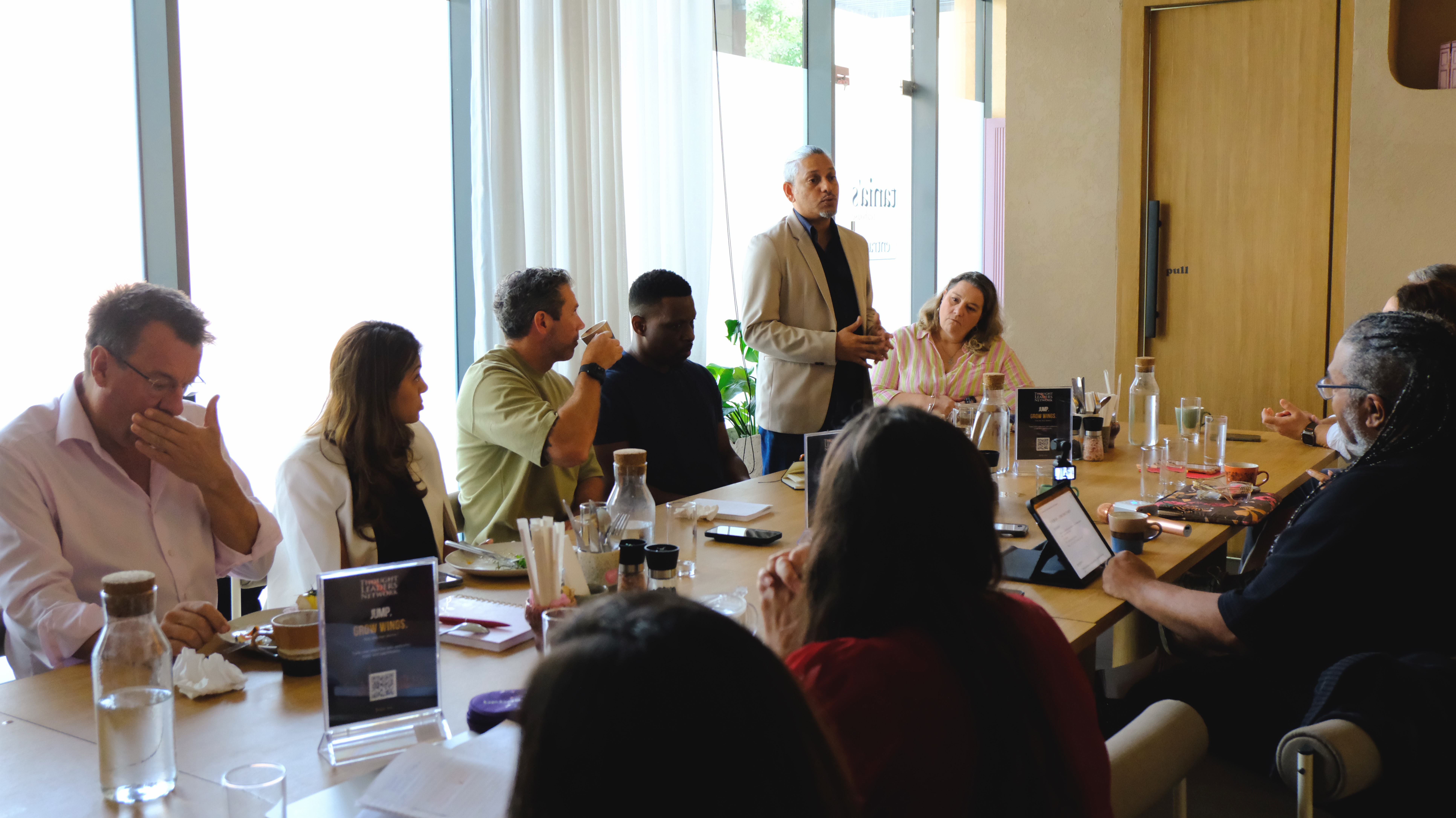
We bring together business leaders, founders, experts and decision-makers and start a conversationi. There are no presentations and nobody gets a 20 minutes to explain how clever they are. My job is simply to facilitate what happens around the table.
That sounds simple. It isn't.
Every conversation develops differently. People bring different experiences, opinions and perspectives into the room, and whatever I thought might happen at the beginning can quickly change. I have to stay completely present and respond to what is happening as it happens.
What interests me is where that ability actually came from.
I learned much of it long before I started working with CEOs and thought leaders. I learned it in radio stations, television, live entertainment and major events.
Live audiences are wonderfully unforgiving. They don't care what you planned. Technology fails. Someone says something unexpected. An audiences responds differently from the way you expected. You cannot stop everything and ask for 20 minutes to rethink your strategy.
You make another decision. Then another. Then another.
Do that thousands of times over decades and something that once required enormous concentration begins to look instinctive.
But it isn't instinct.
It's thousands of hours of pattern recognition.
AI Changes the Equation Again
Professor Owen raises another point that matters enormously for leaders.
He isn't worried simply because people are using AI. We have always handed parts of our thinking to technology. Calculators calculate. GPS navigates. Search engines remember things for us.
The important question is whether we choose which parts of our thinking we hand over.
AI can help you know more. It can research the people attending your meeting, analyse the numbers, summarise documents, suggestion questions and give you ten possible strategies before breakfast.
Brilliant. Use it.
But then you walk into the room.
Someone says something nobody expected. Another person reacts. The numbers suddenly mean something different. A new opportunity appears. What looked important before the meeting may no longer matter.